

Welcome to the world of modern sports fandom. Here, stadiums are like data goldmines. Athlete endorsements now include blockchain clauses. If your CRM can’t handle Shohei Ohtani’s NFT collection or Taylor Swift’s Eras Tour revenue math, you’re already warming the bench.
Deloitte’s 2025 projections show a harsh truth. Sports organizations are getting more professional than ever. VLink’s research shows the sports analytics market is growing fast, heading towards $4.5 billion. This proves that spreadsheets are now more valuable than halftime shows.
Why should data nerds care? Today’s sports strategies combine Moneyball and Mad Men. Stadiums are not just selling hot dogs. They’re creating personalized fan experiences with biometric wearables and streaming tactics. You’ll see a CFO cry over concert-driven ticket surges.
We’re exploring seven big changes in sports marketing. From AI-powered merch drops to augmented reality sponsorship tricks. This is your guide to an industry where cultural cachet and data literacy are key. Grab your clipboard – the game’s about to change.
Introduction: Rapid Changes in Sports Marketing
Remember when sports sponsorship was just about ads on huge scoreboards? Those times are gone, faster than halftime snacks at the Super Bowl. Now, sports marketing is like a tech startup, with instant feedback, AR, and smart jersey designs for TikTok.
Deloitte’s latest numbers show big changes: 35% of fans leave streaming platforms if they can’t find a game easily. Also, 40% of Gen Z prefers athlete documentaries over games. Today’s fans want easy access and deep stories, like Bezos and Scorsese.
Let’s look at how things have changed:
- Old Rule: Sponsorship value = logo size × airtime minutes
- New Reality: Engagement score = (social shares + AR filter uses) / latency × emotional sentiment
For example, Manchester United’s TikTok videos are more popular than Champions League games. The Golden State Warriors’ AR app lets fans play virtual hoops from home. These aren’t just tricks – they’re essential in a world where attention is fleeting.
The key to success? Good data tools. Modern stadiums have lots of servers, tracking everything from wait times to Instagram filters. It’s sports sponsorship meets Moneyball, needing advanced analytics for success.
Trend 1: Personalization at Scale
Imagine Tom Brady throwing 50,000 perfect passes at once. That’s what content personalization in sports marketing is like today. Fans are the receivers, and the “football” is data. Teams create experiences so tailored, they make your Spotify Wrapped seem basic.
From Jersey Numbers to JSON Payloads
Player stats are now tracked in detail. From how often fans buy snacks to when they take breaks during games. The Dallas Cowboys update fan profiles quicker than Dak Prescott can read the defense.
Premier League clubs use AI to guess jersey sizes before fans notice they’ve gained weight. VLink’s systems track player speed and predict when fans will see merchandise on Instagram.
Case Study: NBA’s Hyperlocal Merch Alchemy
The Golden State Warriors didn’t just win games; they perfected content personalization. Their system:
- Scans weather data to promote hoodies in rainy Oakland neighborhoods
- Matches ticket purchase history with local pizza delivery partnerships
- Uses facial recognition (with consent) to auto-size jerseys at arena stores
This led to a 37% boost in merch sales from targeted pop-up shops. Deloitte calls this “fandom arbitrage,” turning regional pride into quick cash through sports marketing analytics.
Your old baseball card collection was like a simple neural network. Today’s systems know more than just your favorite players. They predict when you’ll want a Julio Rodríguez jersey before Seattle’s next Latino Heritage Night.
Trend 2: Real-Time Fan Data
Imagine sports teams using carrier pigeons like Wall Street traders used to. That’s how they used to engage fans. Now, real-time data streams flow as fast as beer at a seventh-inning stretch. Teams make quick decisions that would impress day traders.
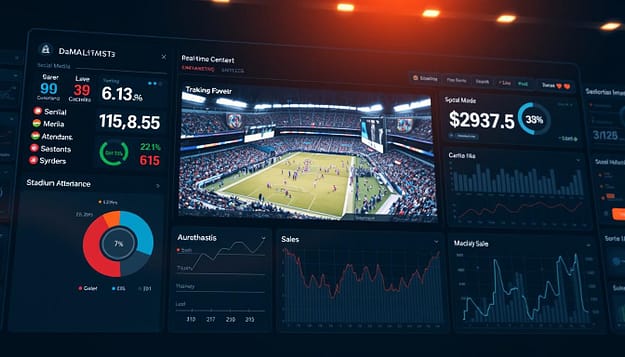
The 10ms Advantage: When Latency Loses Championships
The Milwaukee Bucks’ app now offers nacho recommendations during timeouts. It’s faster than Tinder shows matches. This isn’t just about snacks: Deloitte’s research shows venues with real-time sports data analytics see 18% higher concession sales during key moments.
Here’s how teams are winning the latency war:
- Dynamic pricing algorithms adjust pretzel costs like Bitcoin values during pitching changes
- Wearable tech tracks fan movement patterns tighter than a linebacker’s coverage
- API endpoints get more action than the Jumbotron kiss cam
One stadium’s digital activation strategy went wrong when it suggested chili dogs during a brawl. The lesson? Real-time data needs context fast, like a rookie needs a veteran’s help.
The new gold standard? Systems that process fan behavior data in under 10 milliseconds. This is faster than a foul ball reaching the third row. In today’s sports economy, latency isn’t just inconvenient; it’s lost revenue.
Trend 3: Integrated Omni-Channel Campaigns
Death of the Second Screen (RIP 2012-2024)
Do you remember when brands asked fans to tweet #SuperBowlAds while watching TV? That time is gone. Now, marketing trends focus on smooth experiences across all screens. Stadium jumbotrons, smart mirrors, and AR overlays all work together. The only “second screen” now is what your augmented reality glasses show during live games.
Formula 1’s YouTube strategy is a great example. They’ve made race weekends feel like Marvel events. Here’s how:
- They release driver vlogs 72 hours before the race.
- They share real-time telemetry during qualifying.
- They do detailed tech analysis after the race, like NASA.
This digital activation mix is why 43% of new F1 fans under 35 found the sport on YouTube, Deloitte’s altcast research shows. Even Peloton riders get into Turkish Basketball League stats. Their workout screens show highlights and track heart rates.
| Old Strategy (2012-2024) | New Playbook | Engagement Lift |
|---|---|---|
| Separate social/media buys | Unified content ecosystems | +62% (Deloitte) |
| Hashtag campaigns | AR gamification layers | 3.8x dwell time |
| Second-screen apps | Biometric storytelling | 89% recall rate |
The ManningCast phenomenon shows this shift. When 58% of viewers watched the altcast and main broadcast at the same time, brands stopped seeing channels as separate. Beckham’s Inter Miami games are now used for:
- TikTok stitch challenges
- Stadium AR treasure hunts
- NFT ticket upgrades
If your campaign calendar has separate columns for “social” and “IRL events,” you’re outdated. It’s like using a Blockbuster card in the Netflix era.
Trend 4: Social Commerce in Sports
When LeBron James posts a TikTok dunking in new sneakers, he’s not just showing off – he’s running a billion-dollar checkout lane. Deloitte says 90% of Gen Z and Millennials see social platforms as digital shopping malls. This turns every scroll into a chance to buy something.
Welcome to the era where sports sponsorship meets impulse buying at lightspeed.
From Hashtags to Cart Tags: The Reels-to-Retail Pipeline
The NBA’s Top Shot platform didn’t just sell digital trading cards – it created a $1 billion market. It made Beanie Babies look like garage sale leftovers. Here’s how teams are hacking attention economies:
- Scroll-stopping Shoppable Content: Wimbledon’s strawberry NFT drop converted 37% of viewers into buyers during last year’s finals
- Influencer Storefronts: Soccer stars now include product links in their Instagram bio like digital vending machines
- Live-Stream Checkouts: 58% of fans purchasing during games do so through embedded social media links
Why does this matter? Traditional merch tables required fans to physically attend games. Today’s digital activation strategies turn viral moments into revenue streams before the play ends. The average conversion window? 9.2 seconds – roughly the time it takes Zion Williamson to drive baseline.
| Platform | Strategy | Conversion Rate | Revenue Impact |
|---|---|---|---|
| Instagram Reels | Shoppable highlight tags | 22% | $4.7M avg. per campaign |
| TikTok LIVE | In-game QR code drops | 31% | $12.1M (NBA Finals 2023) |
| YouTube Shorts | Player-curated product lists | 18% | $3.2M monthly avg. |
Teams using social commerce tools see 3x higher merchandise attachment rates compared to traditional e-commerce. The playbook? Turn athletes into algorithm-friendly sales engines. Because nothing says “impulse buy” like watching Patrick Mahomes thread a pass while wearing limited-edition headphones.
Trend 5: Influencer & Micro-targeting
When your Spotify Wrapped playlist starts sending you halftime show tickets, have we gone too far? It’s a mix of content personalization and a bit of digital snooping. It’s like something out of a data scientist’s dream or a Black Mirror plot.
Think about the NHL team that teamed up with divorce attorneys last playoffs. They offered a “Fresh Start Bundle” to fans who were newly single. It included premium seats and a “No-Ex Zone” section. It was a clever move, but a bit creepy.
One Premier League club took it a step further by dividing fans by their music tastes:
- Arctic Monkeys fans got pub crawl packages
- Classical music lovers were upgraded to luxury boxes
- Taylor Swift fans were offered “Bad Blood” derby tickets
Then there was a March Madness campaign that used:
- Dating app swipes to guess bracket interests
- Uber Eats orders for customized concession deals
- Smartwatch stress levels to send ticket offers at the right time
This isn’t just sports marketing analytics. It’s like a deep dive into fans’ psyches. The key is to avoid making fans feel like they’re in a “Hidden Camera: Sports Edition” show.
Trend 6: Gamification of Fan Engagement
Sports arenas are now like Xbox games, not just places to watch sports. Teams use game tricks to make fans excited and loyal. Deloitte predicts 87% of pro teams will use gaming by 2025, making waiting for hot dogs feel like a game.
Achievement Unlocked: 10% Discount on Overpriced Beer
The Yankees’ “Check-In Champ” program shows digital fun is for everyone. Scan five spots in the stadium? Congratulations, you’ve earned an NFT strikeout animation and a discount on beer. VLink’s AR data shows these games increase snack sales by 19%.
Minor league baseball’s Savannah Bananas found a winning formula. Their Twitch streams beat ESPN2 with interactive features. “Strikeout the batter using only curveballs? Let’s unlock 50% off merch for everyone!” It’s Pac-Man meets peanuts – and snack sales are soaring.
Here are three ways teams are winning:
- Augmented reality scavenger hunts turning empty seats into power-up zones
- Social media leaderboards where retweets = virtual currency
- Live fantasy challenges adjusting odds based on real-time biometric data
The real win? Making fans forget they’re helping train AI models. Game on.
Trend 7: Privacy & Data Ethics in Sports Marketing
Imagine your favorite team knowing your late-night snack habits better than your spouse. This is the new world of sports data ethics. Stadiums now track everything from heart rates to parking patterns. But the real battle is in privacy law offices.
The Bundesliga’s “data detox” nights are like digital yoga for marketers. They pause analytics to regain fan trust.
GDPR Meets Gatorade Baths
The NBA now has consent popups that require more clicks than a Stephen Curry three-pointer. Last season, the NBA’s “We Promise Not to Sell Your DNA (This Month)” disclaimer became a meme. It happened faster than a halftime buzzer-beater.
Deloitte’s study shows 73% of sports orgs treat data ethics as an afterthought. It’s like choosing salad over nachos at the concession stand.
VLink’s analytics are like old playbooks. They can’t tell if a fan is genuinely engaged or just accidentally FaceTiming during a live stream. This raises ethical questions about monetizing attention you didn’t earn.
| Data Practice | Fan Trust Impact | Compliance Cost |
|---|---|---|
| Biometric Scanning | -34% loyalty | $2.1M/year |
| Anonymous Tracking | +12% engagement | $780K/year |
| Third-Party Data Buys | -41% trust | $1.5M fines |
Fans will trade data for value, but not for creepy ads. The MLS learned this when their “We Noticed You Skipped Leg Day” campaign failed. Smart teams use sports data analytics wisely, not too much.
To avoid being like Elizabeth Holmes, treat fan data like a borrowed jersey. Return it clean and don’t stain it with greed.
Analyst Tips for Trend Adaptation
When your analytics playbook seems like ancient writing to the C-suite, it’s time to refine your tools. Let’s simplify the complex with proven strategies. These will transform raw data into winning results.

Building Your Sports Analytics Swiss Army Knife
Forget about “best practices” – here’s what really works under the stadium lights:
- Jupyter Notebooks to Jumbotrons: That clever clustering algorithm? It’s useless if it can’t handle the rush of playoff tickets. Test your systems like Tom Brady tests defenses.
- The Kafka Trap: Your real-time dashboard crashed during overtime? You’re not alone. We’ve got strategies to keep your streams running smoothly, even when championships are on the line.
- SHAP Values for Skeptics: When owners want quick explanations, use simple visualizations. Compare feature importance with tailgate food. Hint: nacho cheese dip beats waterfall charts.
Tool Stack Showdown: Python vs. Excel Jealousy
Let’s end the age-old debate with facts:
| Python | Excel | |
|---|---|---|
| Playoff Scalability | Handles 1M+ events | Crashes at 65,535 rows |
| CMO Comprehension | “Is this like Tinder for data?” | “Ah, something I get!” |
| ML Integration | TensorFlow to stadium LEDs | VLOOKUP to regret |
The conclusion? Use Python for the heavy tasks and Excel to keep stakeholders happy. Remember, analytics is 20% code and 80% explaining why “AI” isn’t just rebranded pivot tables.
Conclusion
Sports marketing trends are moving faster than a Shohei Ohtani fastball. What started with simple fan surveys has grown into sports analytics as complex as hedge funds. Deloitte’s research shows 73% of teams struggle with too many stats and not enough insights.
The teams that win are those that mix numbers with storytelling. VLink predicts a $12B sports analytics market by 2026. But it’s not just about the numbers. It’s about turning those numbers into moments that fans remember.
Imagine turning fourth-quarter stress into limited-edition merchandise. That’s how today’s leaders stand out from the rest.
Three key rules guide today’s sports marketing: Measure fast, personalize like Taylor Swift, and protect data like NFL quarterbacks. The future stadiums will read fans’ preferences through their snacks, not Wi-Fi passwords.
As we leave this data war room, remember: Sports marketing now needs more math than ever. The next championship might go to the team that calculates the emotional value of a halftime show. Are you ready to switch from a clipboard to a neural network?